
Dal Tadka (Spiced Tempered Lentils): A Lesson in Lentils
In my quest to dismiss the myth that Indian cooking is not for the faint-hearted and to help spread my knowledge on some simple and traditional Indian food recipes, like this Dal Tadka, I have started this series called Indian Cooking 101. To make it more interactive and as helpful as I can for my readers, I welcome you to email me any questions that you may have in the process. I will try and respond to the questions personally through email, or in the next part if it’s connected to what I have already planned to discuss.
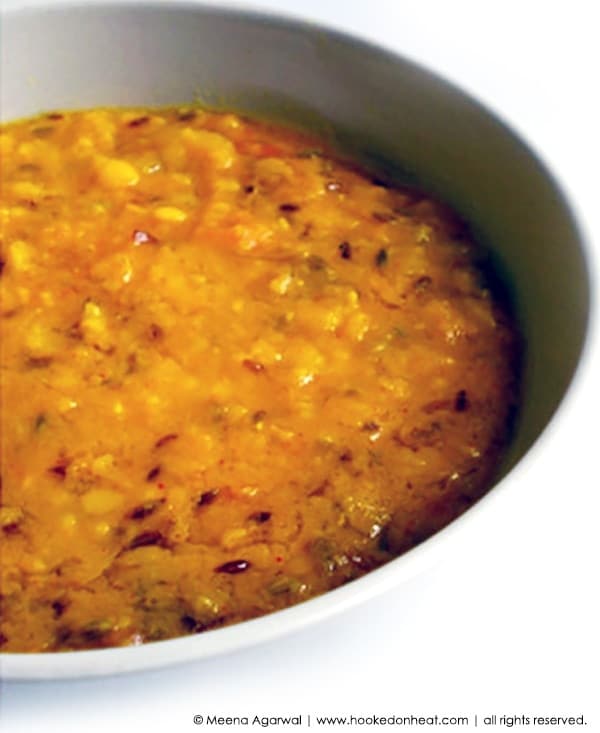
When I started out to try and impart what I know of Indian cooking, I had a few things in mind that I knew I just had to talk about – lentils sort of topping this list. I did not want to make this series all about the simplicity in the recipes, but instead, I wanted to discuss the essence of Indian food right from the basics. When one thinks of Indian food, the first few things that come to mind definitely include spice, curries, Butter Chicken and of course, Dal Tadka. While these may somewhat play key roles when introducing someone to Indian cuisine, it is hard to leave out the other factors that contribute to the rising popularity of Indian food.
Picking up from where I last left off with an introduction to the most basic spices found in almost every Indian home, let me go a step further and bring you into the whole new wonderful world of lentils. Lentils, or Dal, as they are most often known in the Indian menu, are a staple at almost every Indian meal. Ranging from the most basic cooking method of simply boiling it with a dash of salt and adding a robust tempering right before serving, to a more tedious method of slow cooking it with various spices and vegetables, lentils have come a long from where we first knew it to be.
What are lentils?
Lentils are basically legumes and have somewhat of a rich nutty flavour. They are usually sold pre-packaged in bags or boxes, but can also be bought in bulk. When shopping for lentils, it is most important to note how much of an effort you are actually willing to spend in their cooking process. When storing lentils, it is best to keep them in large air-tight containers in a cool spot. Right next to where you store your pasta, is probably also the best spot to display your lentil collection.
Lentils come in varied sizes, shapes and colours, each equipped with its own distinct flavour and commendable cooking times. Many of them cooked be cooked in similar ways, but don’t let the difference in tastes of each of them surprise you. That’s what’s so special about including Dals in your meal plans. Not much of an effort where the cooking is concerned, and yet you can have variety in your meals simply by alternating the kinds of lentils you use.
Some of the most common lentils in Indian cooking are:
- Masoor (red lentils): The red split Masoor lentils are most commonly used in many homes. They take the shortest time to cook and require no pre-soaking whatsoever. This type of lentils is usually found in everyday meals and make a quick go-to dish when you’re running short of time.
- Toor/Arhar (yellow lentils): The Toor Dal, is dull yellow in colour and is most often the base for many South Indian specialities like Sambhar. They need to soak for a few hours before cooking, and take longer to boil down to a soft edible center. A quick way to overcome the long cooking process would be to use a pressure cooker. On the contrary, they are perfect for a slow cooker if you’re in need to let a meal do its own thing while you go about your own.
- Chana (split-pea lentils): The Chana Dal, or split-pea lentils have a deep yellow colour and look like the halves of a chickpea, only in a smaller size. They take the longest to cook and are extremely compatible with both, the pressure cooker as well as a slow cooker. They often take center stage in special dishes, and are a favourite to serve at dinner parties.
- Moong (green lentils): Being green in colour and taking the shape of a tiny bean is probably what sets this Dal apart from its various counterparts. The Moong Dal is rarely used in preparing everyday meals, but gets its fame as the star of a widely loved dessert call Moong Dal Halwa.
What does an everyday Indian meal look like?
An everyday Indian meal usually comprises of some rice, a few Rotis, a Dal and a vegetable, accompanied with some yogurt, pickle and a light salad. When you’re in no mood to go the whole mile, Dals are best enjoyed with steamed rice and a dash of spicy Indian pickle. In many Indian households, a different Dal is cooked each day, accompanied by a complimenting vegetable. Dals are also used in many non-vegetarian preparations, the most popular known being the Dhansak. A gift from the Parsis, Dhansak is a slow-cooked stew of meat, vegetables and lentils, all simmering in rich, robust spicy flavours.
With its chockfull of proteins, lentils like this Dal Tadka recipe, are a great addition to a vegetarian diet. Add a handful to your stews and soups for that extra burst of nutrition. Lentils can easily take on varied flavours and add richness to your daily meals. So go ahead, and give it a try.
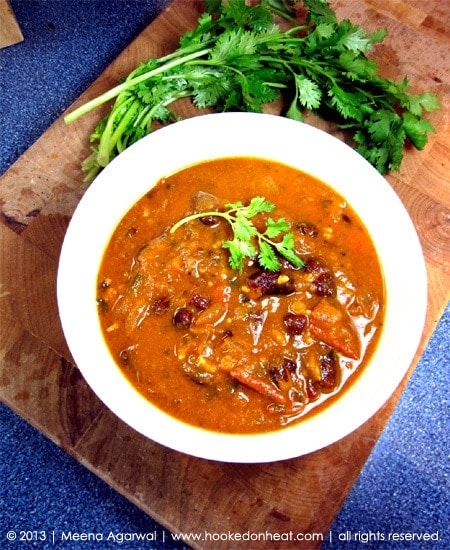
Dal Tadka (Spiced Tempered Lentils)
Ingredients
- 1 cup red lentils lal masoor
- 1 tbsp light cooking oil
- 1 tsp cumin seeds
- 1 tsp fennel seeds
- 1 small onion thinly sliced
- 1-2 green chillies finely chopped
- 2 garlic cloves sliced
- 1 inch piece of ginger peeled and thinly sliced
- 1/4 tsp turmeric powder
- 1/4 tsp red chilli powder
- 1 medium tomato chopped
- 2 cups water
- salt to taste
- finely chopped fresh cilantro for garnish
Instructions
- Boil the lentils till tender and set aside.
- In a deep pan, heat oil and add in the cumin and fennel seeds. Once they starts to sizzle, add in the onions, chillies, garlic and ginger.
- Fry of a few minutes till onions lightly brown, before adding in the turmeric and chilli powder. Give it a quick stir and add in the tomatoes. Once the tomatoes start to soften, add in the cooked lentils and about 1-2 cups of water, depending on the consistency you prefer.
- Season with salt, and let the Dal simmer for a few minutes to allow all the flavours to blend.
- Garnish with fresh cilantro and serve warm.
Some other additions and substitutions to try with this recipe:
- Alternate with different lentils to get varied flavours.
- Make a tempering of curry leaves and mustard seeds to add a South Indian touch.
- Substitute Masoor with Toor Dal, and add a teaspoon each of Sambhar Masala and Tamarind extract while boiling. Temper with curry leaves and mustard leaves and season with a splash of lemon juice to make Sambhar.
This post was originally published in May 2007 and has been recently updated.
If you liked this Tadka Dal recipe, I’m sure you will love my Dal Makhani, Simple Everyday Instant Pot Dal and my Palak Dal as well.
Made this recipe? Rate it by clicking the number of stars on the recipe card. Want to share your version with me? Tag me on Instagram @hookedonheat
MORE POSTS ON INDIAN COOKING 101
- Kitchen Essentials
- Part 1: Know your Spice
- Part 2: A Lesson in Lentils
- Part 3: Pickles and Chutneys
- Part 4: Indian Street Food
- Part 5: Cooking Curry for Beginners
- Part 6: Quick Cooking Tips for Indian Food
- BONUS 1: How NOT to Cook Indian Food
- BONUS 2: How to Cook Indian Meals in 20 Minutes

Indian lentils are so good at taste and rich source of proteins. Your recipes seems so simple and worth trying.
This is a super recipe! We thoroughly enjoyed eating this. I served it with the fried eggplant from this site, chapatis, chopped cilantro and key limes. This recipe is a must try! Note: Do not skip the fennel and cilantro seeds. They really made this dish a treat!
i love your recipes. simply out of the world. keep up the good work meena.
I’m excited to try out this new daal recipe! The use of fennel seed is intriguing. I’ll let you know how it turns out!
Thanks,
Katherine (“The Bombay Blonde”)
Valerie,
The lentils are dried(rock-hard). Soaking them for a few hours followed by pressure cooking for 4-5 whistles is how Indians manage them. If you don’t soak, you should pressure cook them for longer, 15 whistles for some of them. The time depends on the type of dhal.
Merrin
Are the lentils used in Indian recipes fresh or are they dried (rock-hard) like we get at the grocer? Some recipes I have read do not seem to allow enough time for the dried lentils to cook through. Tempering in ghee for a few minutes they are like stones.
Thank you,
Valerie
Hi,
My Wife has gone on a fellowship for three months and I have to cook for my family. I used to make Lemon Rice earlier. I tried to cook the Tadka Dal based on your recipe. My daughter liked it very much. Thanx. Continue your good work.
Ganesh
hii wat is ghee?? ive been trying to get some good indian recipes to make for my boyfriend. He misses home cooking and always makes me yummy dishse. So im trying to do the same for him, ur recipes have been soo helpful.
Shaunna, ghee is simply clarified butter made by boiling unsalted butter till it reduces to solid fats. A much healtheir substitute is regular cooking oil. I’m glad that you’re enjoying my recipes, and look forward to having you drop by and trying out many more!
I love lentils! It’s so great that you are demystifying good Indian food. My favorite are red lentils. They cook up so fast and delicious, I cook them several times a month. Keep up the good work!
Your blog is awesome!! I love spicy foods, and your recipes make my mouth water for some excellent Indian food!!
Ur recipies and ur blog is so dam good……..
I love dal, but as a Sri Lankan, I’d get teased by my Indian friends when I made it, because I made it ‘different’!!!! Love your work Meena!!!
It’s funny how we often judge food by the way we’re accustomed to eating it, isn’t it Anika? I would love to see your recipe of Dal, that I’m assuming is very similar to a south Indian version. But that’s only a guess, so please forgive my ignorance! 😉
Hi Meena,
I don’t eat a lot of Indian food, but I do like it. Unfortunately, I’m not great with spicy foods unless they’re really mild. I know, kind of takes the fun out of it… My husband, on the other hand, loves it! I’m going to print out a few of your recipes and see what I can coax him to cook. I’m sure it won’t be too hard.
Love all of your blog that I’ve read so far. Interesting and easy to read. The pictures are great too, even the one of what Indian food is not supposed to look like. Makes me hungry.
Thanks for inviting me over to visit your blog
TrishA
OMG…Where was this blog 7 years ago when I was trying to figure out how to make some Indian food a co-worker had brought in?..It only took me over 2 years to finally figure out how to make it!!! This site looks great!
Hi Meenakshi,
If I am not mistaken, Toor Dal is also called ‘Arhar Dal’ in some places, esp North India/Punjab side. It would be nice if you add that up for readers who might get confused as to what ‘Arhar’ is!
Anyways, my reason for commenting is neither toor or arhar 😀
It’s been quite sometime since I left cooking on my own – I transferred from Kathmandu to Delhi and now to Agra, where though alone, I don’t do my cooking. But still, I just wanted to say ‘thank you’ for all those delightful recipes that I found on this site during my stay in Ktm, and the fun I had in cooking them up.
In fact, my basic for cooking knowledge can be attributed to two wonderful bloggers – Nupur (who isn’t blogging now) and you!
The other day, just for a lark, I set out to make ‘masala pea’ (dried, not ‘tari-waale’). A friend was over. And he was a bit surprised to see the way I put in the oil, the garlic, the masalas and the onions (and of course the peas) one by one… That time I really thought of this site and so I am here to forward my sincere thanks!
Keep up the good work, I might not be a regular, but rest assured whenever I set out to cooking again, I will be here!
Regards, DJ
Hi DJ, yes, Toor Dal is infact known as Arhar with us North Indians, I’ll surely update the note. Thanks for all the kind words, I’m truly honoured and humbled that you enjoy my work.
Thanks so much for visiting my site. Your blog is great and seriously just made me hungry. Keep it up and I’ll keep coming back for more. =)
Hi- liked ur website and the fact that we have a similar approach for blogging and how we started cooking:) was thinking ofposting about lentils but now that i have seen urs, can use ur link or post something else. good work!!!
Thanks so much for the dal lesson! I have been wanting to ask the guys in my local Indian market for a while. I had no idea what is used for which dish and bought all four of the lentils you mentioned plus some lentil flours and have been making some dal, but didn’t realize that some need to soak first or need longer cooking times. Here’s a question for you. Asteiofada – is there something else I can use instead of that in recipes and that is the same thing as hing, right? All the varieties I find in the stores around here (Lansing MI) have wheat in them and I can’t eat wheat.
Keep the lessons coming!!
Hi Ginger, yes, Hing is the Hindi transalation of Asafortida. It has a very strong distinct flavour that I doubt could be subtituted by anything else. I’d suggest simply leaving it out. I rarely use it in my Dal recipes, it’s an aquired taste that I’m not too fond of. So don’t worry, I’m sure you’ll enjoy your Dals as much without it.
Meena,
I love dals. They are simplicity wrapped up in goodness.
Like your blog. Hooked on….
GC
hi meena,
wish you had included pictures of the various dals! i love cooking dals but have to always scratch my head to figure out which dal is being called for by the recipe. i know to recognise masoor dal, moong dal, toor dal, urud dal and chana dal but then i start getting confused by all the colours (why is moong called green dal when it is yellow?!) and the whole versus split stuff. do you know of any site on the web which shows all the pictures and name the dals accurately?
Ah,Meena, where were you the first time I tried cooking red lentils! I didn’t realize they cooked the fastest, and what did I have after braising them for a loooooong time with some lamb? MUSH! You live and learn… and read Hooked On Heat. 😉
Hi Meena, you have a very nice site and all your pictures are so lovely.
I think your commentary on lentils is north-indian centric. Moong daal is used in the south to make Pongal a very delicious mix of rice and moong that is pressure cooked together. It is also the first daal introduced in a baby’s diet as it is the easiest to digest. Whole moong (green) daal is also used in Andhra to make pesarattu a delicious dosa like pancake. I guess what I am trying to say is depending on where you live in India the daals in common usage vary widely. That is the beauty of Indian cuisine. Its rich diversity. However as restaurants continue to serve up the same old daals and cooking shows do the same our food heritage will get diluted and we’ll be stuck with eating just toor and masoor. Vive Le Difference!
Hi Aparna, thanks for your input. True, as you move around the country, various lentils can be found cooked in varied ways in different homes. What I intended to establish here was to give others an idea of the various types of lentils found commonly throughout India. I’m sure I’ve missed many to state the tons of ways they’re cooked, but then again, with such a diverse cuisine like Indian food, one can never do enough justice when discusing it. 🙂
I’m learning so much from you! Does Takda translate to Tempered? What does that mean exactly?
Hi Jaden! Yup, Tadka, does translate to tempered. It’s the process to flavouring oil/ghee/butter and adding it to the boiled lentils. Hope you enjoy the recipe. 🙂
i am a dal junkie…so really enjoyed your post…wonderful…thanks for sharing…great pic
Thanks Dilip!
Dal is one of my favourite foods. One of my favourite ways to have it is just as you mentioned – with rice and some achaar. Heaven!
Growing up my mom would make dal often because me and my siblings really love it but not her so much. Now that she is older (and wiser 🙂 ) She now cooks dal very often. I guess her taste buds have changed.
Thanks for the info on the lentils.
You’re most welcome Cynthia. I never enjoyed most of the varieties as a kid as well, but now I can’t think of a thali meal without it!
I am so enjoying your blog. I love Indian food, but have never tried making it – terrible, I know. This is making it seem much less daunting! Thanks!
Glad you find it resourceful Jenn. I do hope you try out some of the recipes, am sure you’ll enjoy them! 🙂