home     about     recipes     faqs     cook's book club     links     rss

Intro to Indian, Part 4 - Indian Street Food: Tandoori Chicken Pops

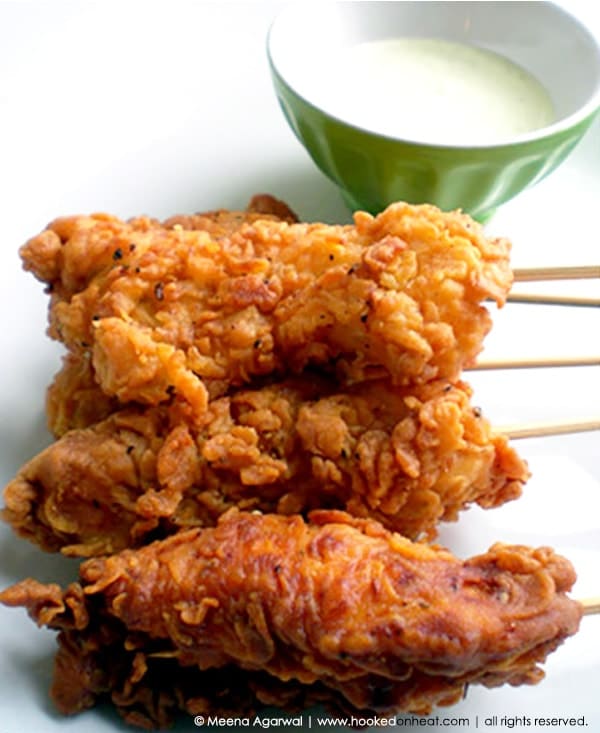
Tandoori Chicken Pops

Growing up, I seldom remember a weekend where we had the house to ourselves. While few weekends were spent hosting visiting family and friends from far off places, most of our Saturday nights was spent amidst mighty morsels of succulent bites of food. My parents, like most true-blood Indians, love to shower people with their hospitality and feed them till they’re almost ready to burst. We Indians are known for our need to treat our guests with the utmost care and generosity, and one common way we all seem to achieve in doing so is through our food. Food holds a very special place in any Indian household. No festivity is complete without a table laden with colourful dishes end to end, enough to please a king.It’s no wonder that out of all the rooms in a home, many Indians take the most pride in showing you their kitchens. Truly, we love food, and our life surrounds it. Our conversations, no matter how they begin always seem to divert to the food related with the topic in question. A simple wedding announcement would automatically lead to the designing of the menu. Even meeting up with a long lost friend would be done over lunch or dinner, over food they could reminisce about.

While our meals may be laced with rich aromatic flavours, what I look forward to the most at any Indian-inspired party is the platter of appetizers. Indian hors d’oeuvres range from savoury street food, like the most loved samosas (deep fried pastry filled with potatoes) and pakodas (spiced fritters), to the ever famous tandoori tikkas (marinated meat grilled in a clay oven). They are steamed, grilled and fried. They come in various sizes and shapes, some that can be daintily picked by two fingers, and others that require a spoon and lots of napkins. No matter in what form, they each have something special to offer, and no cocktail party would regret having them.

Ask any one who has ever walked the streets of any major Indian city, be it Delhi, Mumbai or Bangalore; and they will attest to the fact that no evening stroll is complete without making a stop at one of the many hawker stalls that surround every busy area in these cities. Street after street, stall after stall, you will be greeted by smiling faces and tempting plates that urge you to come and give it a try. Smothered with spicy and tangy chutneys, yogurt and tons of other fixings, each plate creates a whole new tale in your mouth. My fondest memories of my days spent in India involve sneaking out of the house on the pretext of an evening walk while I actually skipped to hawker next door and enjoyed deep fried savoury chips drowned in tangy yogurt and sweet tamarind chutney, running through the rain to buy a big batch of jalapeno fritters, and waiting in long lines to savour a bite of the best kebabs I had ever tasted on the face of this planet.

A friend recently asked me to make a list of some of my favourite food joints that I strongly feel she should try on her visit to Delhi. My response – if she could stomach it, nothing beats the spicy street food.

Previous installments of the Indian 101 series:

- Intro to Indian
- Part 1: Know your Spice
- Part 2: A Lesson in Lentils
- Part 3: Pickles & Chutneys

Jump to the Recipe »

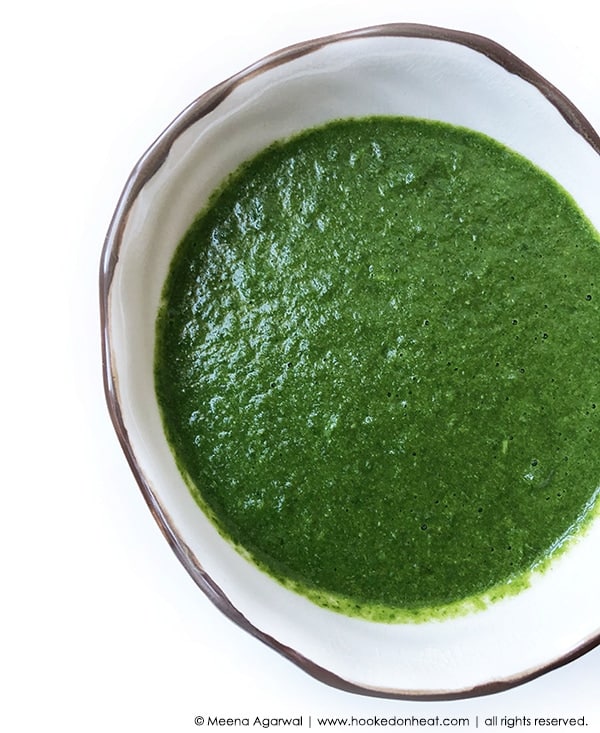
Intro to Indian, Part 3 - Pickles and Chutneys: Green Chutney

Hari Chutney

It’s often believed that no Indian meal is complete without a good helping of tangy chutney and a touch of spicy pickle on the side. Delicately spiced, these Indian condiments range in taste, texture and colour to suit every palate, be it hot, sour, salty or sweet. Since chutneys and pickles hold a very prominent place on every Indian thali, a large round steel tray traditional used to serve a selection of different dishes, including rice, lentils, vegetables, rotis and a sweet dish, I couldn’t help but dedicate a section to its own individuality.

Pickles

Unlike the classic dill pickle found in almost every refrigerator in every home in North America, Indian pickles are fiery hot condiments that are often eaten in minute quantities. They can be seen as preserves, with salt being the most common preservative and can be stored up to many months. While most Indian pickles tend to be sour, you can also find a good range in the sweet varieties. Earlier pickles were most commonly made from mangoes that are available in abundance throughout, but now one can easily find a jar of pickle of any vegetable desired, or even a combination of them.

Most pickles are made by sun drying the fruits and vegetables, and then storing them in a jar of salt over a period of time. Mixed in oil and spices and they are then flavoured, some even simmered for hours. Over the hot summer months, it’s very common to find a family gathered out on the patios or terraces, sitting in a circle preparing the ingredients for pickling, while at the same time sharing in idle gossip. Each family prides in its own secret recipe passed on from generations, making this a family event to look forward to. 

Chutneys

Chutneys can be classified in two basic categories. The fresh chutneys, those that are blended with fresh ingredients and spices, and require no cooking whatsoever, and the cooked chutneys, that are simmered over a low heat till all the flavours are blended well. While chutneys are enjoyed and eaten in almost every home throughout the country, it is as diverse in its flavour as the number of hands that make it everyday.

Some of the most popular chutneys include:

Coconut Chutney: A favourite accompaniment to the spicy Masala Dosa, this fresh chutney is made by blending freshly grated coconut with generous amounts of green chillies, fresh ginger, curry leaves, Urad dal and mustard seeds.

Tomato Chutney: This refreshingly sweet chutney is made by slowing cooking fresh tomatoes with an added flavour of curry leaves, ginger and spices. Eaten hot or cold it brings a wonderful additional dose of flavour to any simple meal. 

Tamarind Chutney:A slow simmering chutney of tamarind pulp, jaggery (unrefined sugar) and a mix of spices, this tangy chutney is always a welcome companion to many Indian snacks. It is a wonderful blend of sweet and sour flavours with a hint of spice and adds that much needed zing to many popular street foods. 

Mango Chutney:This chutney is easily made by sautéing diced mangoes with an array of different spices and lemon juice. As much as it is enjoyed with a traditional Indian meal, it also serves as a great topping for any regular sandwich.  

Onion Chutney:A personal favourite, onion chutney is a quick two-step process. First, sliced onions are sautéed in a skillet with red chillies. Then, once cooled, it is blended to a touch of tamarind and sugar to a smooth fine paste. A perfect blend of spicy, sweet and sour, this delicious relish is good enough to enjoy on its own.

Previous installments of the Indian 101 series:

- Intro to Indian
- Part 1: Know your Spice
- Part 2: A Lesson in Lentils

Jump to the Recipe »

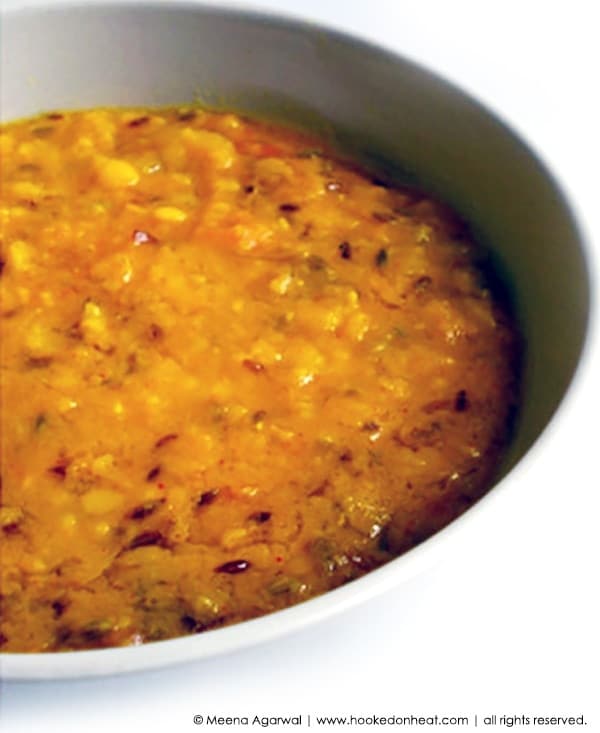
Intro to Indian, Part 2: A Lesson in Lentils

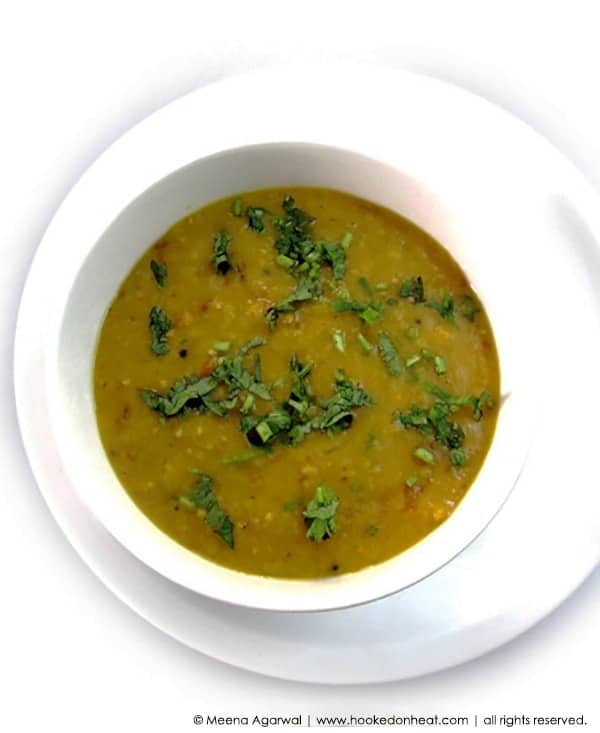
Tadka Dal (Tempered Lentils)

When I started out to try and impart what I know of Indian cooking, I had a few things in mind that I knew I just had to talk about. I did not want to make this series all about the simplicity in the recipes, but instead, I wanted to discuss the essence of Indian food right from the basics. When one thinks of Indian food, the first few things that come to mind definitely include spice, curries, and Butter Chicken. While these may somewhat play key roles when introducing someone to Indian cuisine, its hard to leave out the other factors that contribute to the rising popularity of Indian food.Picking up from where I last left off with an introduction to the most basic spices found in almost every Indian home, let me go a step further and bring you into the whole new wonderful world of lentils. Lentils, or Dal, as they are most often known in the Indian menu, are a staple at almost every Indian meal. Ranging from the most basic cooking method of simply boiling it with a dash of salt and adding a robust tempering right before serving, to a more tedious method of sautéing it various spices and vegetables, lentils have come a long from where we first knew it to be.

Lentils are basically legumes and have somewhat of a rich nutty flavour. They are usually sold pre-packaged in bags or boxes, but can also be bought in bulk. When shopping for lentils, it is most important to note how much of an effort you are actually willing to spend in their cooking process. When storing lentils, it is best to keep them in large air-tight containers in a cool spot. Right next to where you store your pasta, is probably also the best spot to display your lentil collection.

Lentils come in varied sizes, shapes and colours, each equipped with its own distinct flavour and commendable cooking times. Many of them cooked be cooked in similar ways, but don’t let the difference in tastes of each of them surprise you. That’s what’s so special about including Dals in your meal plans. Not much of an effort where the cooking is concerned, and yet you can have variety in your meals simply by alternating the kinds of lentils you use.

Some of the most common lentils are:

MASOOR (red lentils): The red split Masoor lentils are most commonly used in many homes. They take the shortest time to cook and require no pre-soaking whatsoever. This type of lentils is usually found in everyday meals and make a quick go-to dish when you’re running short of time.

TOOR/ARHAR (yellow lentils): The Toor Dal, is dull yellow in colour and is most often the base for many South Indian specialities like Sambhar. They need to soak for a few hours before cooking, and take longer to boil down to a soft edible center. A quick way to overcome the long cooking process would be to use a pressure cooker. On the contrary, they are perfect for a slow cooker if you’re in need to let a meal do its own thing while you go about your own.

CHANA (split-pea lentils): The Chana Dal, or split-pea lentils have a deep yellow colour and look like the halves of a chick-pea, only in a smaller size. They take the longest to cook and are extremely compatible with both, the pressure cooker as well as a slow cooker. They often take center stage in special dishes, and are a favourite to serve at dinner parties.

MOONG (green lentils): Being green in colour and taking the shape of tiny bean is probably what sets this Dal apart from its various counterparts. The Moong Dal is rarely used in preparing everyday meals, but gets its fame as the star of a widely loved dessert call Moong Dal Halwa.

An everyday Indian meal usually comprises of some rice, a few Rotis, a Dal and a vegetable, accompanied with some yogurt, pickle and a light salad. When you’re in no mood to go the whole mile, Dals are best enjoyed with simply rice and a dash of pickle. In many Indian households, a different Dal is cooked each day, accompanied with a complimenting vegetable. Dals are also used in many non-vegetarian preparations, the most popular known being the Dhansak. A gift from the Parsis, Dhansak is a slow cooked stew of meat, vegetables and lentils, all simmering in rich, robust spicy flavours.

With its chockfull of proteins, lentils are great addition to a vegetarian diet. Add a handful to your stews and soups for that extra burst of nutrition. Lentils can easily take on varied flavours and add richness to your daily meals. So go ahead, and give it a try.

Previous installments of the Indian 101 series:

- Intro to Indian
- Part 1: Know your Spice

Jump to the Recipe »

Intro to Indian, Part 1: Know your Spice

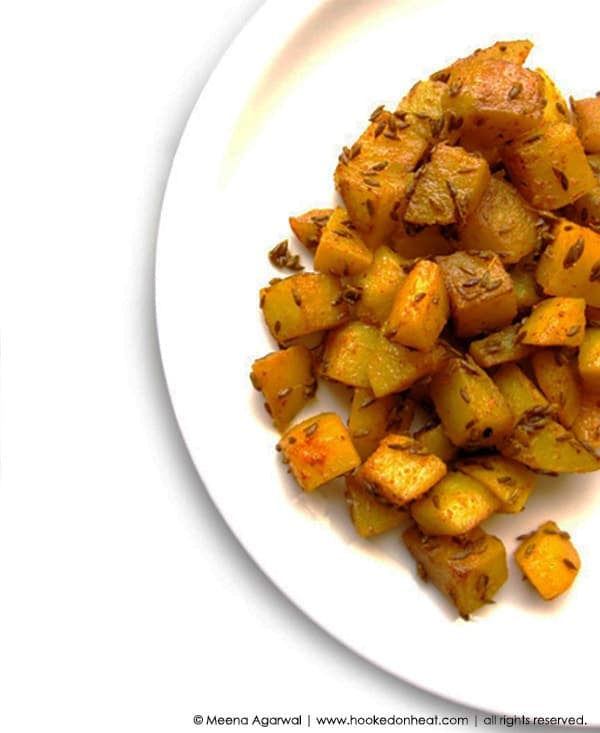
Jeera Alu
Jeera Alu

In my quest to dismiss the myth that Indian cooking is not for the faint hearted and to help spread my knowledge on cooking some simple and traditional Indian food, I have started this series called Intro to Indian. To make it more interactive and as helpful as I can for my readers, I welcome you to email me any questions that you may have in the process. I will try and respond to the questions personally through email, or in the next part if it’s connected to what I have already planned to discuss.Before I start to talk about cooking Indian food, here are a few tips that I think would help make the process a tad bit simpler. While I already have a Quick-Start Guide on my homepage, this list is minimal for those who want to start slow.

SPICES: If you’ve never cooked Indian food before, and the only spice even remotely connected to Indian cooking ever to step into your spice collecetion is curry powder, then don’t fret. Start with the basics. Here is a list of the most standard spices that would help you cook many delicious Indian meals without making you go all out and splurge on many exotic flavours that you may be clueless about.

 - Cumin Seeds
 - Mustard seeds
 - Turmeric powder
 - Red Chili powder/Cayenne
 - Coriander Powder
 - Garam Masala

Once you have these staples and are confident about playing with them, then go a step further and try out a few more new to you. Slowly, but surely, you’ll have your own collection of spices that you’re fond of and those that you know would enable you to cook meals that you like.

UTENSILS: While certain dishes require certain traditionally designed equipment, a good start would be to invest in a few simple utensils that you already may or may not have.

 - a non-stick wide pan
 - a deep heavy-bottomed pot
 - a kadhai, or wok, preferably non-stick or aluminium

When it comes to cooking simple Indian food, one would only need to be familiar with a few spices and the flavours that go with them. As a self-starter, it’s very easy to lose oneself in the wide selection of spices. True, they may seem intimidating at first, but then as you go along and acquaint yourself with the robust flavours they have to offer, you can’t help but get excited at the prospect of shopping and stocking your spice racks with some of your favourites.

As a first in this series, I thought I’d start with a recipe so simple, yet so flavourful, that would help you identify its distict taste and aroma. Most Indian cooking would begin with a tempering, simply put, it’s just a process where spices like cumin or mustard seeds are added to hot oil and allowed to sizzle. Doing so adds plenty of flavour to the oil, which then helps in penetrating through the dish during the cooking process. Tempering, or tadka, is also a common way of adding a burst of flavour to a subtly spiced dal.

The one thing I like about this dish is how the cumin dominates in taste. Another reason for adding it to the menu today, is to allow you to experiment and play around with some of the flavours you already love, or some that you wish to try. Potatoes are a wonderful vegetable to use when you need to experiment with a certain spice. Since they lack in much flavour themselves and carry out others with ease, I’d suggest you use not more than a combination of 2-3 spices to begin with. This would help you identify the flavours and also enable you to decide whether or not you like the mingling of them together.

Previous installments of the Indian 101 series:

- Intro to Indian

Jump to the Recipe »

Intro to Indian, Let’s Begin

Of the few complaints I get on Indian cooking, the one that stands most prominent is the myth that Indian cooking is just too hard. Yes, you heard me right, a myth! Now before you roll your eyes at me and say, “Yea sure, easy for you, you’re Indian!”, just hear me out. True, I was born Indian in an Indian household with a Mom who cooks the most delicious Indian food I know. But truth be told, and as much as I would like to believe, I wasn’t born with Indian culinary instincts in me. Yes, like any of you not familiar with the South-Asian cuisine, I too started off without much knowledge.

Try as I might, somehow, I can’t convince people enough on just how simple and quick and not to mention, healthy, Indian food can be. So here is where my mind got to work. I thought why not start a cooking class, and Indian food 101, if you will, introducing people to the simple basics of cooking Indian. A beginner’s course for all the eager enthusiasts willing to start from the top.

And with this, I announce the start of a fabulous series, Intro to Indian, where I will discuss how to make basic Indian food. We will begin with the essentials, and slowly move up to a point where you will be confident enough to throw in a pinch of this and a dash of that. Hopefully, through this series, you will see that once you know the bare minimum, the rest from then on is smooth sailing. And then maybe, just maybe, I will finally be able to dismiss the myth that Indian cooking is just too hard. Yes, you heard it right again, myth!